
From Our Butcher's Block
The 5 Most Tender Cuts of Steak (And How We Prepare Them)
After nearly 60 years of hand-cutting steaks in Loveland, we know a thing or two about tenderness.
There's nothing quite like cutting into a perfectly cooked steak and feeling your knife glide through like butter. That moment—when the meat yields effortlessly and melts on your tongue—is what separates a good steak from an unforgettable one.
At The Black Steer, we've been aging and hand-cutting our beef in-house since 1966. That's nearly six decades of learning exactly what makes a steak tender—and how to coax the best out of every cut.
So what makes certain cuts more tender than others? It comes down to two things: muscle location and connective tissue. Muscles that work less during the cow's life stay tender, while cuts with minimal connective tissue don't need hours of cooking to break down. Let's explore the five most tender cuts we serve at our Loveland steakhouse.
Filet Mignon — The Undisputed King of Tenderness
If tenderness is your top priority, the filet mignon is the cut for you. This prized steak comes from the tenderloin—a long, narrow muscle that runs along the cow's spine. Because this muscle does virtually no work, the meat is incredibly soft with a fine, buttery texture that practically dissolves on your palate.
The trade-off? Filet mignon is leaner than other cuts, which means it has a milder, more delicate beef flavor. That's why we recommend our guests pair it with a rich sauce or compound butter to add depth.
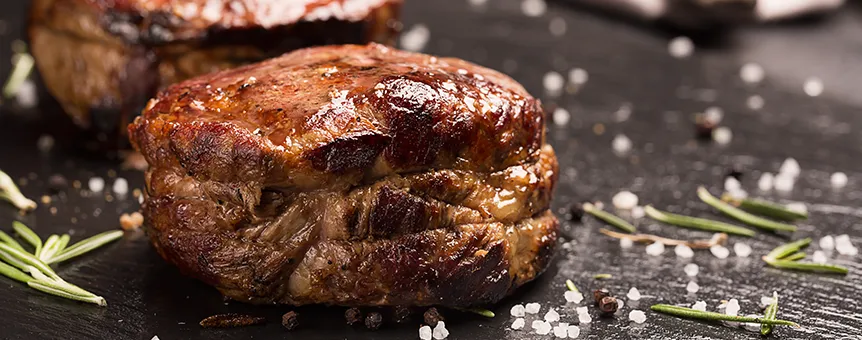
How We Serve It
Our filet mignon is hand-cut from center-cut tenderloins aged in-house. We recommend cooking to medium-rare (130-135°F) to preserve that legendary tenderness. Try it topped with our house-made garlic herb butter.
Ribeye — Where Tenderness Meets Flavor
The ribeye is the steak lover's steak. Cut from the rib section (ribs 6-12), this cut features extraordinary marbling—those white streaks of intramuscular fat that melt during cooking and baste the meat from within. The result? A steak that's both incredibly tender and packed with rich, beefy flavor.
What many people don't know is that the ribeye is actually made up of several muscles. The most prized is the ribeye cap (spinalis dorsi)—a crescent-shaped section along the outside edge that many consider the single most flavorful piece of beef on the entire animal.
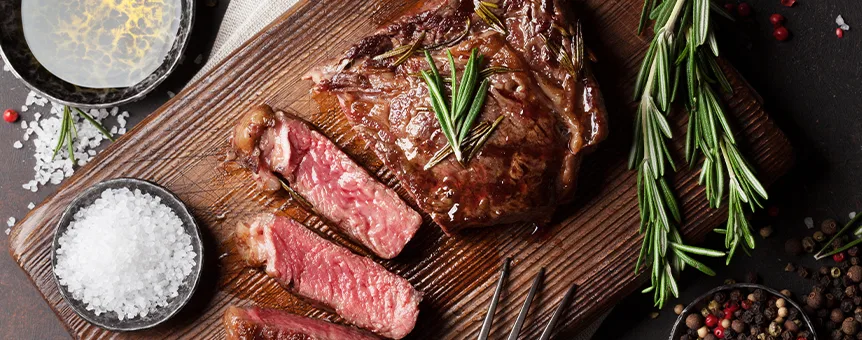
How We Serve It
We hand-select ribeyes with superior marbling and age them in-house to develop deeper flavor and increased tenderness. Best enjoyed at medium-rare to medium (135-145°F) to allow the fat to fully render.
New York Strip — The Perfect Balance
The New York strip sits in the sweet spot between the buttery tenderness of a filet and the robust flavor of a ribeye. Cut from the short loin, this steak features a firm yet tender texture with a strip of fat along one edge that adds flavor and juiciness.
What we love about the strip is its satisfying chew—tender, but with enough texture to remind you that you're eating a real steak. It's the go-to choice for guests who want the best of both worlds.
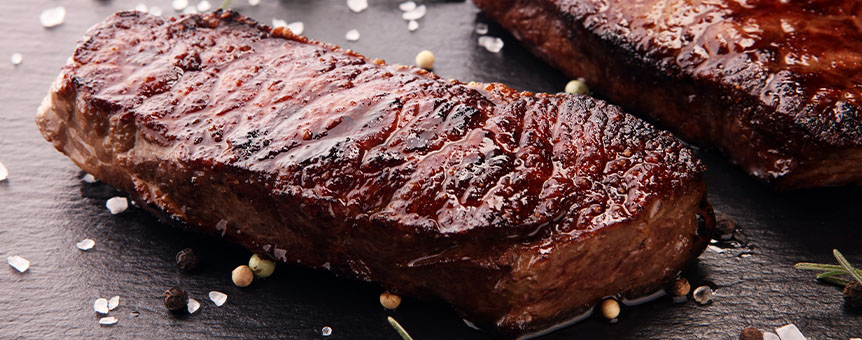
How We Serve It
Our New York strips are cut thick (at least 1.25") and aged to perfection. The strip's moderate fat content makes it forgiving on the grill—ideal for medium-rare to medium doneness. A classic steakhouse choice.
Flat Iron — The Hidden Gem
Here's a cut that surprises people: the flat iron is actually the second most tender muscle on the entire cow, right behind the tenderloin. It comes from the shoulder (chuck), which you'd expect to be tough—but the flat iron's unique muscle fiber structure makes it remarkably tender when properly prepared.
The flat iron offers excellent marbling and a robust, beefy flavor that rivals the ribeye. It's become a favorite among steak enthusiasts in the know—tender, flavorful, and often more affordable than premium cuts.
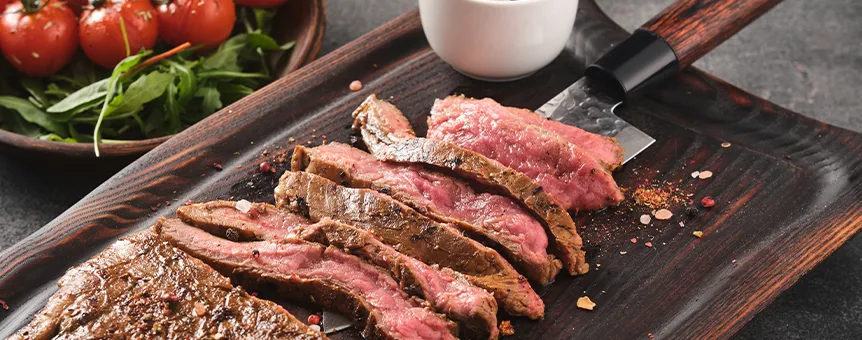
How We Serve It
The flat iron shines when cooked hot and fast to medium-rare, then sliced against the grain. It's a versatile cut that works beautifully on its own or as part of a steak salad or fajitas.
Prime Rib — Slow-Roasted Perfection
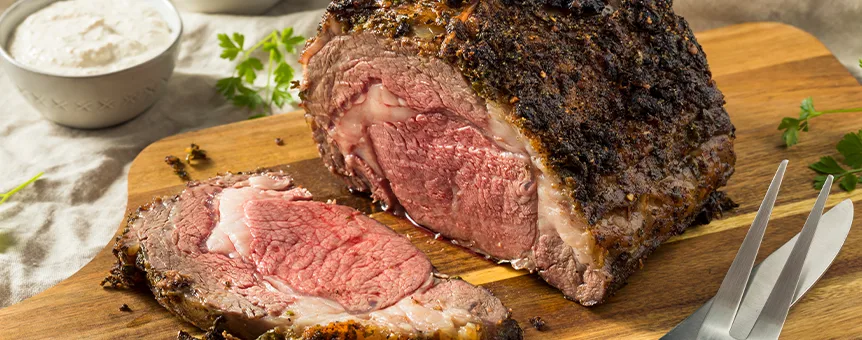
While technically a roast rather than a steak, prime rib deserves a spot on this list. It comes from the same rib section as the ribeye, but the slow-roasting process transforms it into something magical—a tender, juicy, and deeply flavorful cut with a beautiful pink center surrounded by a seasoned, caramelized crust.
The key to prime rib's tenderness is time. Low-and-slow cooking allows the fat to render gradually, keeping the meat succulent while developing complex flavors that you simply can't achieve with high-heat cooking.
How We Serve It
Our prime rib is seasoned with our signature herb blend and slow-roasted to juicy perfection. Available on select nights—ask your server or call ahead to reserve your cut. Served with au jus and creamy horseradish.
Why Our In-House Aging Makes the Difference
Even the most naturally tender cut of beef benefits from proper aging. At The Black Steer, we age our beef in-house—a practice that's become increasingly rare in today's restaurant industry.
During aging, natural enzymes break down the muscle fibers, resulting in a more tender texture. The process also allows moisture to evaporate, concentrating the beef flavor. The result? Steaks that are noticeably more tender and flavorful than what you'll find at most restaurants.
It's one of the reasons we've been voted "Best Steak in Loveland" every year since 2002—and why guests keep coming back to our Downtown Loveland chophouse year after year.
🔥 Quick Tips for Maximum Tenderness
Don't Overcook
Even the most tender cut becomes tough when overcooked. Invest in a meat thermometer—it's the single best tool for perfect steaks.
Let It Rest
Always rest your steak for 5-10 minutes after cooking. This allows the juices to redistribute, resulting in a more tender and flavorful bite.
Slice Against the Grain
When serving cuts like flat iron or flank, always slice against the grain (perpendicular to the muscle fibers) for maximum tenderness.
Bring to Room Temperature
Take your steak out of the fridge 30-45 minutes before cooking. A room-temperature steak cooks more evenly and stays more tender.
Frequently Asked Questions
What is the most tender cut of steak?
The filet mignon (tenderloin) is widely considered the most tender cut of steak. It comes from a muscle that does minimal work, resulting in an exceptionally soft, buttery texture.
What are the top 5 most tender steaks in order?
In order of tenderness: 1) Filet Mignon, 2) Flat Iron, 3) Ribeye Cap (Spinalis), 4) New York Strip, 5) Ribeye. However, flavor preferences vary—many steak lovers prefer the richer taste of ribeye despite the filet being more tender.
Does aging make steak more tender?
Yes! During aging, natural enzymes break down muscle fibers, significantly increasing tenderness. At The Black Steer, we age our beef in-house to ensure maximum tenderness and flavor.
What temperature should I cook steak for maximum tenderness?
For most tender cuts, medium-rare (130-135°F) to medium (135-145°F) is ideal. Cooking beyond medium causes muscle fibers to contract and squeeze out moisture, resulting in a tougher texture.
Ready to Taste the Difference?
Experience hand-cut, in-house aged steaks at Loveland's original steakhouse. We've been perfecting our craft since 1966.
Reserve Your Table View Our Menu ← Back to HomeThe Black Steer Restaurant & Bar
Serving hand-cut, in-house aged steaks in Downtown Loveland since 1966. Voted "Best Steak in Loveland" every year since 2002.